



Thought for the Month September 2026
Forgiveness and Love in Tragedy
The events surrounding the fatal A66 traffic collision have left many people shocked, families grieving and created a social outpouring of anger over how it happened. Seven people died, five young men and two on-duty police officers, and the police investigation now includes further arrests linked to allegations of serious and organised crime. These are grave matters, and it is right that they are investigated carefully and that justice is pursued through proper legal processes. But whilst that is going on what of the very public trial of the five young men who caused the accident, who by deliberately driving the wrong way on a busy dual carriageway lost their lives and took those of the officers with them? Did any of us on hearing of these circumstances have a greater sympathy for the officers whose lives represent the good of our society, more than the five young men who by their actions are being labelled as evil in nature? I know that I did, that’s me being honest, and as a retired police officer myself you might begin to understand why. But as we all know, a Christian heart and mind are never far from the conflict of what we should be according to faith, and what we become without it. In circumstances such as these the ideals of love and forgiveness for my neighbour, whoever they may be, have never felt so at odds to my actual feelings about what has happened, and I can only hope that God understands why and helps me find a way past it.
When harm is so severe, so very painful, acts of forgiveness and love can sound impossible—or even wrong. How do we begin to forgive people who caused such pain either to us or others, intentionally or recklessly, especially where either they or their community still appear so unrepentant? Does Christian love and the offering of unconditional forgiveness, mean we are somehow pretending that what happened was not really as hurtful or as wrong as it feels within us or for others?
The Christian answer is most certainly no. Love does not call evil good. Forgiveness does not erase the truth, cancel consequences, or remove the responsibility of those who have caused harm.
Christian love does not require us to minimise terrible wrongdoing, to diminish the grief of those who suffer, or to abandon the need for lawful justice. Instead, it calls us to mourn truthfully and impartially, to pray deeply, and importantly, very importantly, to resist allowing evil to reproduce itself within our own hearts.
Scripture warns us against becoming consumed by hatred. Jesus tells his followers: “Love your enemies and pray for those who persecute you” (Matthew 5:44). This is not a command to trust someone who is unsafe, restore a relationship without change, or to excuse criminal behaviour. Rather, it is an invitation to place justice in God’s hands and to refuse to let bitterness become the final word in us. By ‘turning the other cheek’ we are not saying that wrongdoing has no consequences, it actually means that we are not appointing ourselves as judge, jury, and executioner. We can and must entrust ultimate judgement to God, while also supporting lawful justice in the here and now, there is room for both.
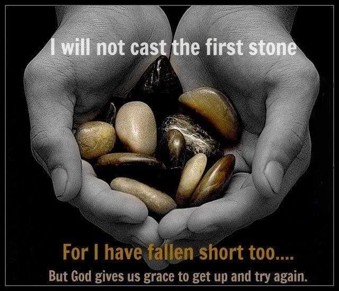
How wrong does something need to be for us to regard it as evil? The word ‘evil’ is now often regarded as archaic and is more likely to be used to paint people or events with a darker shade of malevolence for effect, but I prefer to see it as it was meant in a biblical understanding, which broadly speaking means ‘anything that is bad, broken, harmful, or contrary to the good and holy nature of God’. By this original definition, we then encounter evil all around us and within us every day of our lives, and is why we ask God to ‘deliver us from evil’ every time we recite the Lord’s Prayer. We are all capable and culpable of being evil, we just don’t like thinking we are. It is the very reason why all of us are in constant need of forgiveness, a fact we should consider the next time we choose the word ‘evil’ as a means to describe others, just before we cast our first stone (John 8:7).
Christian love is most certainly not soft about evil. It is strong enough to name it, wise enough to set boundaries against it, and merciful enough to hope that no person is beyond the reach of God’s grace. The cross shows both the seriousness of sin and the depth of God’s redeeming mercy for absolutely anyone. Even in the darkest of circumstances, we can and should, choose to pray for justice, grieve with those who grieve, and leave room for God to bring repentance and transformation where human hearts seem closed. Give it all over to God and let Him bring you peace, after all, what is the alternative?
Amen.
Danny Lamb
God of justice and mercy,
we bring before you all those affected by the A66 tragedy:
the families who mourn, the emergency services, communities in shock,
and all whose lives have been changed by loss.
Bring truth to light and give wisdom to those investigating what has happened.
Protect the vulnerable and uphold all who work for justice and peace.
Where there is wrongdoing, bring repentance.
Where there is grief, bring comfort.
Where anger and hatred threaten to take root,
give us hearts that are compassionate without being naïve,
courageous without being cruel,
and faithful without losing hope.
Teach us to resist evil, pursue justice,
and entrust final judgement to you.
Through Jesus Christ, who is full of grace and truth. Amen